Vänskapsprövningen
User Experience
Exhibition Design
Graphic Design
Overview
Problem summary
With the primary focus on adolescents as the target group, an extensive user study revealed a clear divergence in how they relate to sustainability and consumption: while they can articulate personal wellbeing impacts with clarity, their understanding of environmental and societal consequences remains abstract and emotionally distant. Therefore we asked ourselves a simple but difficult question, how can we support the reimagination of the relationship between humans and consumption?
My role in the project
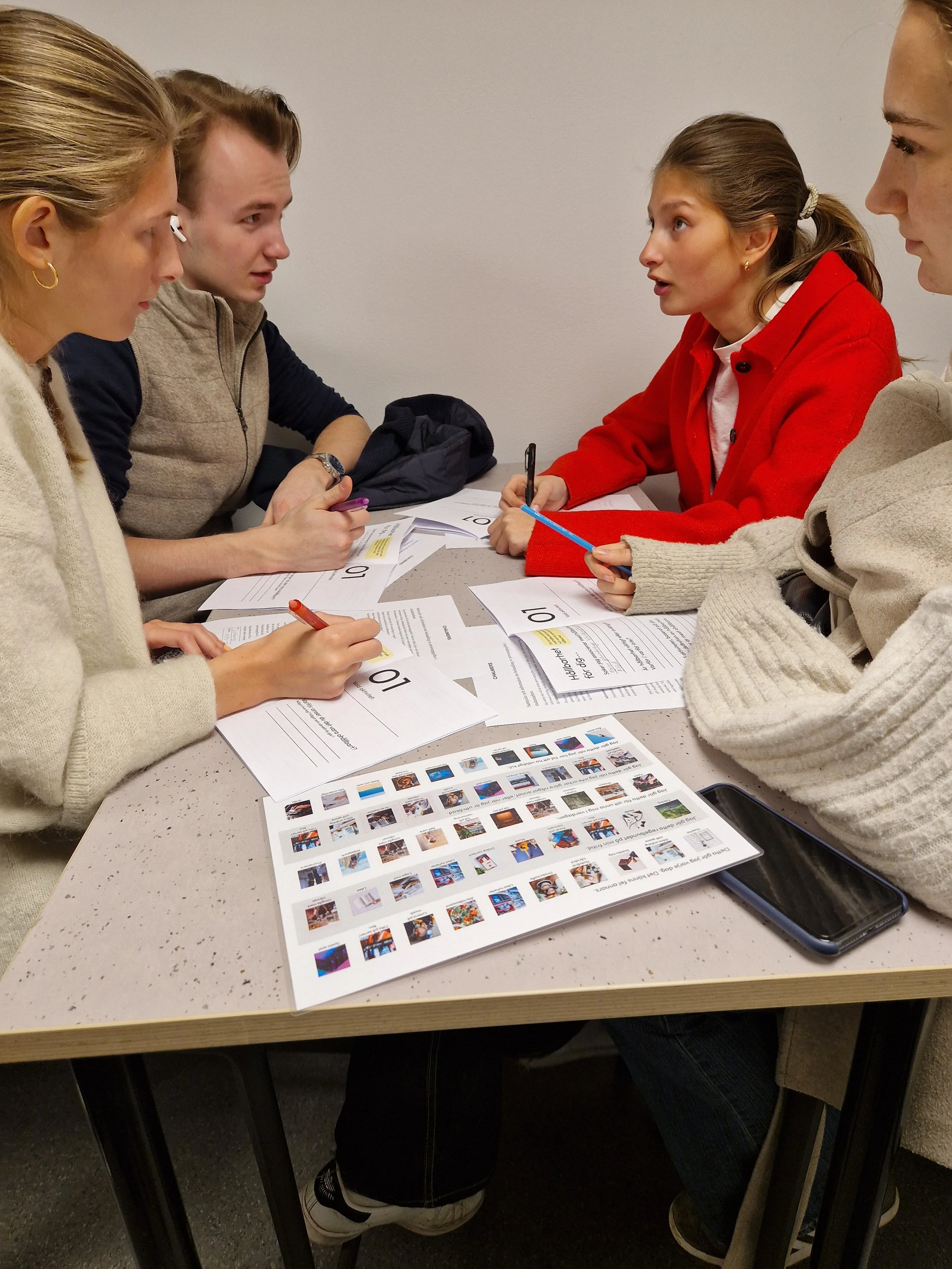
Due to the nature of this masters thesis collaboration, I had a heavy responsibility in every single aspect of the project. One of my more focused responsibilities was conducting the entirety of the second mentality exploration workshop (see process for further information) in which I gathered qualitative and quantitative data from 28 students over the course of 2 hours. Additionally, I was the lead designer of ‘The Futures’ section featured in the installation, constructing the layout of the section, the graphic design choices, the interaction flow and the overall art direction.
Solution summary
We design a one of a kind interactive installation using storytelling and symbolic characters to bridge the gap between abstract sustainability concepts and personal experience and behavior. By combining emotionally relevant narratives for the younger generation with the framework of speculative design, the project demonstrates the potential of interactive storytelling to not only raise awareness but also to build a foundation to activate internal motivation for change. It highlights that meaningful, relatable and memorable experiences are required for behavior change in the context of sustainability.
User feedback
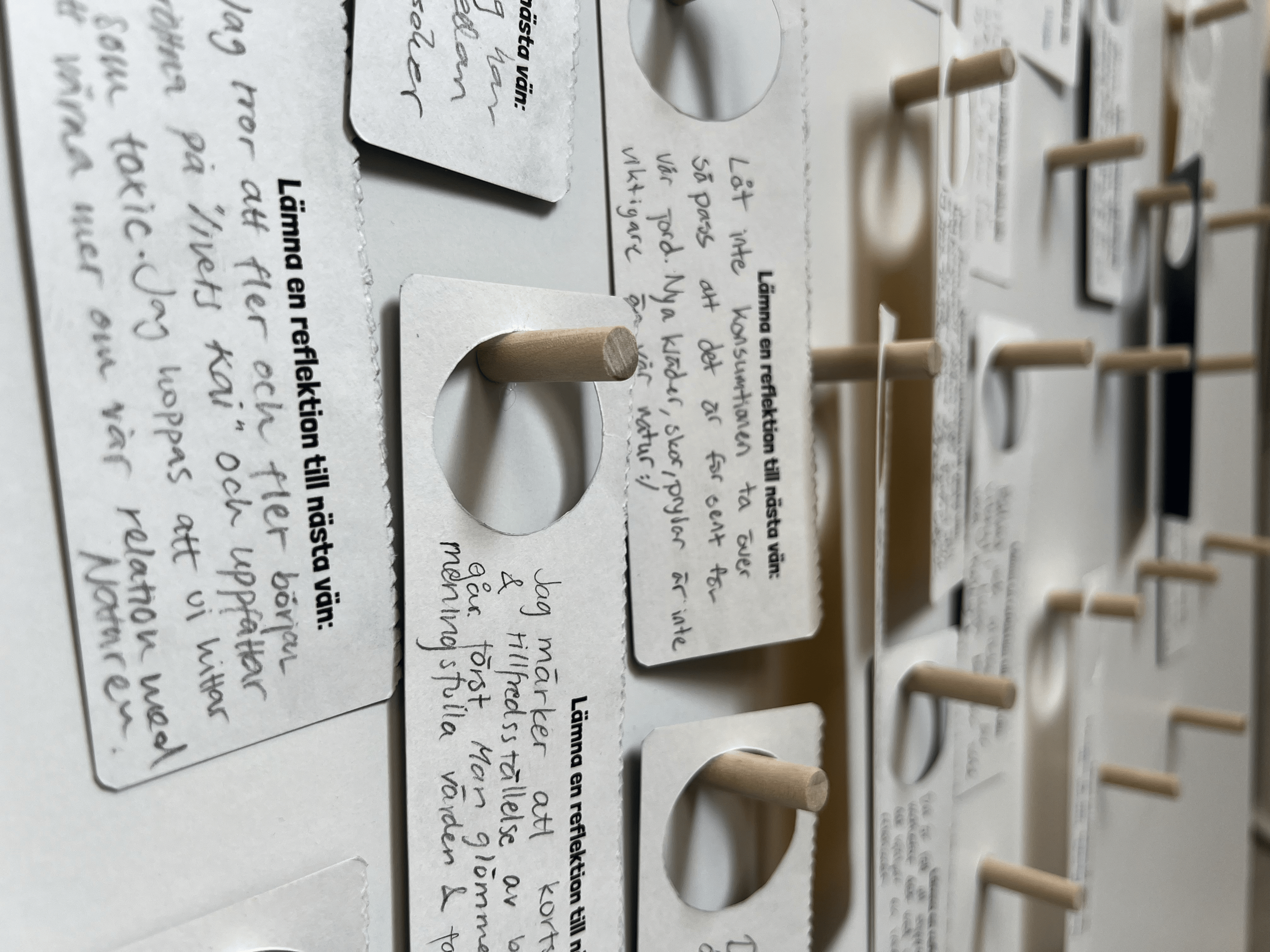
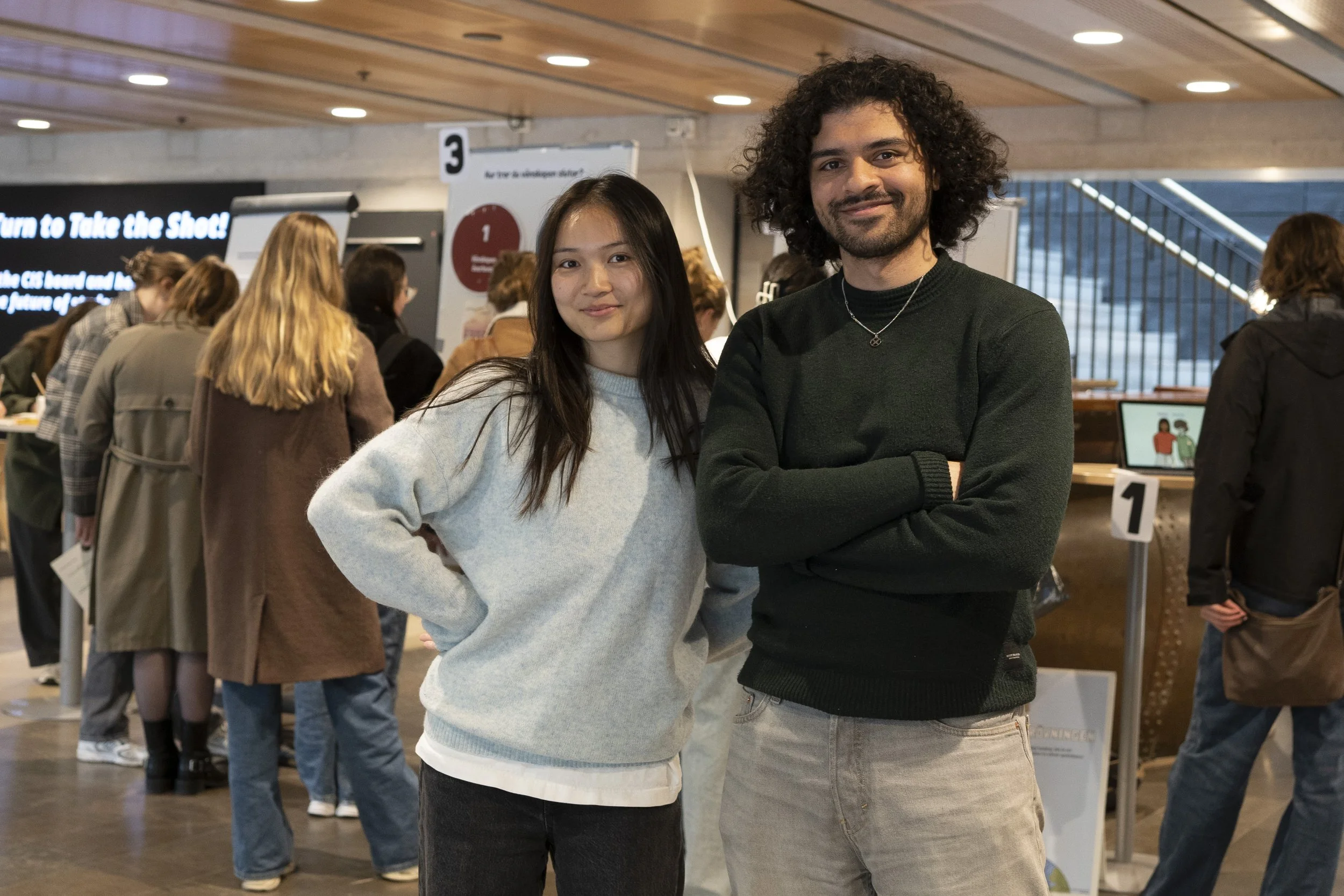
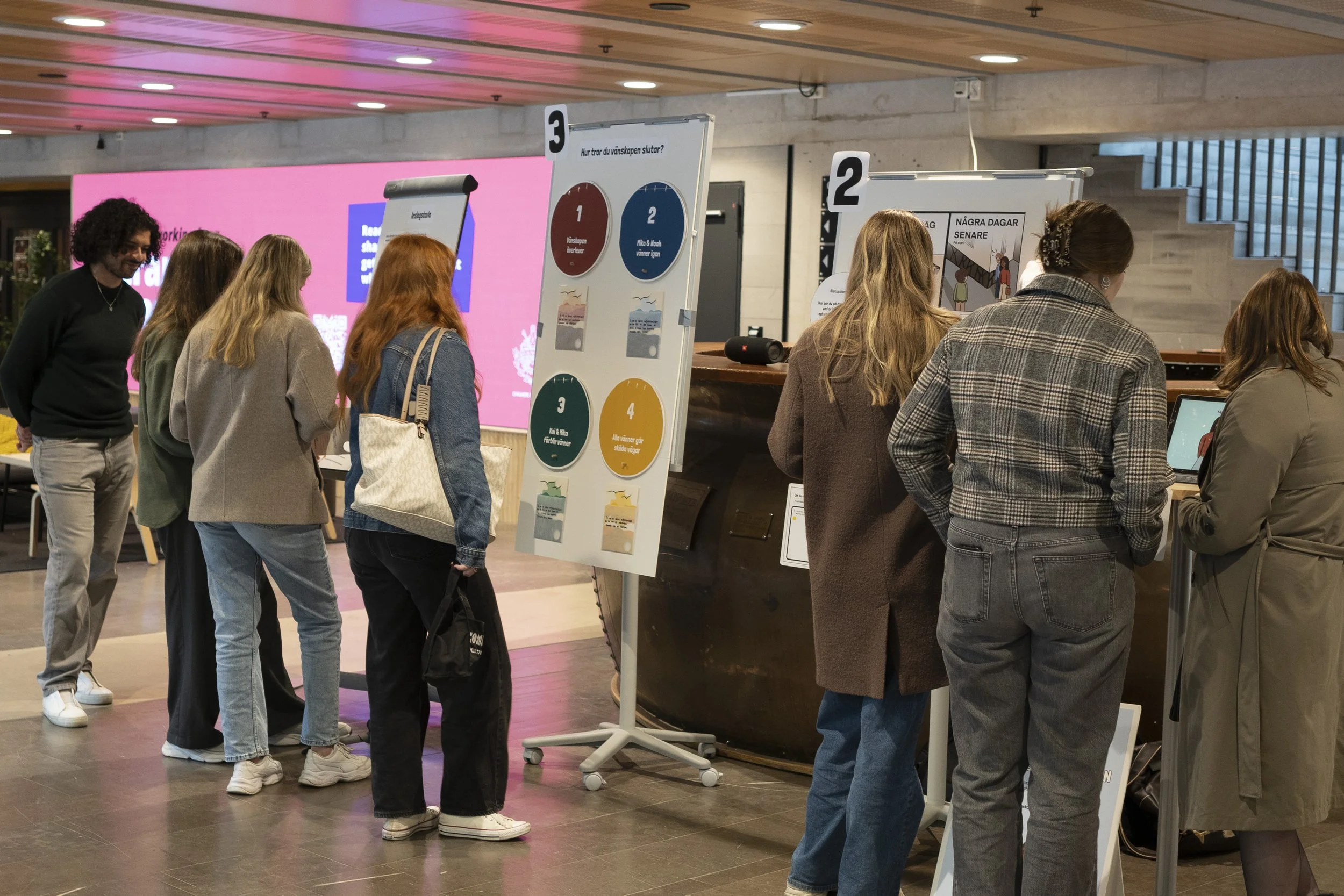
The installation was displayed in an exhibition open for the public in Chalmers main building Kårhuset for 4 hours, and resulted in a combined total of 24 reflections and very positive reception. All reflections focus on creating healthier relationships and dynamics, highlighting human care for other things than themselves, and making time to consciously assess the implication of one's consumption habits.
From the pre-study, overconsumption behaviors and the attitudes towards them amongst adolescents emerged as particularly compelling. We identified overconsumption patterns and the connected fundamental and emotional needs as important study points and thereby the conceptual ambition was formulated: to support adolescents in reimagining the relationship between humans and consumption
We Followed a Compass, Not a Map…
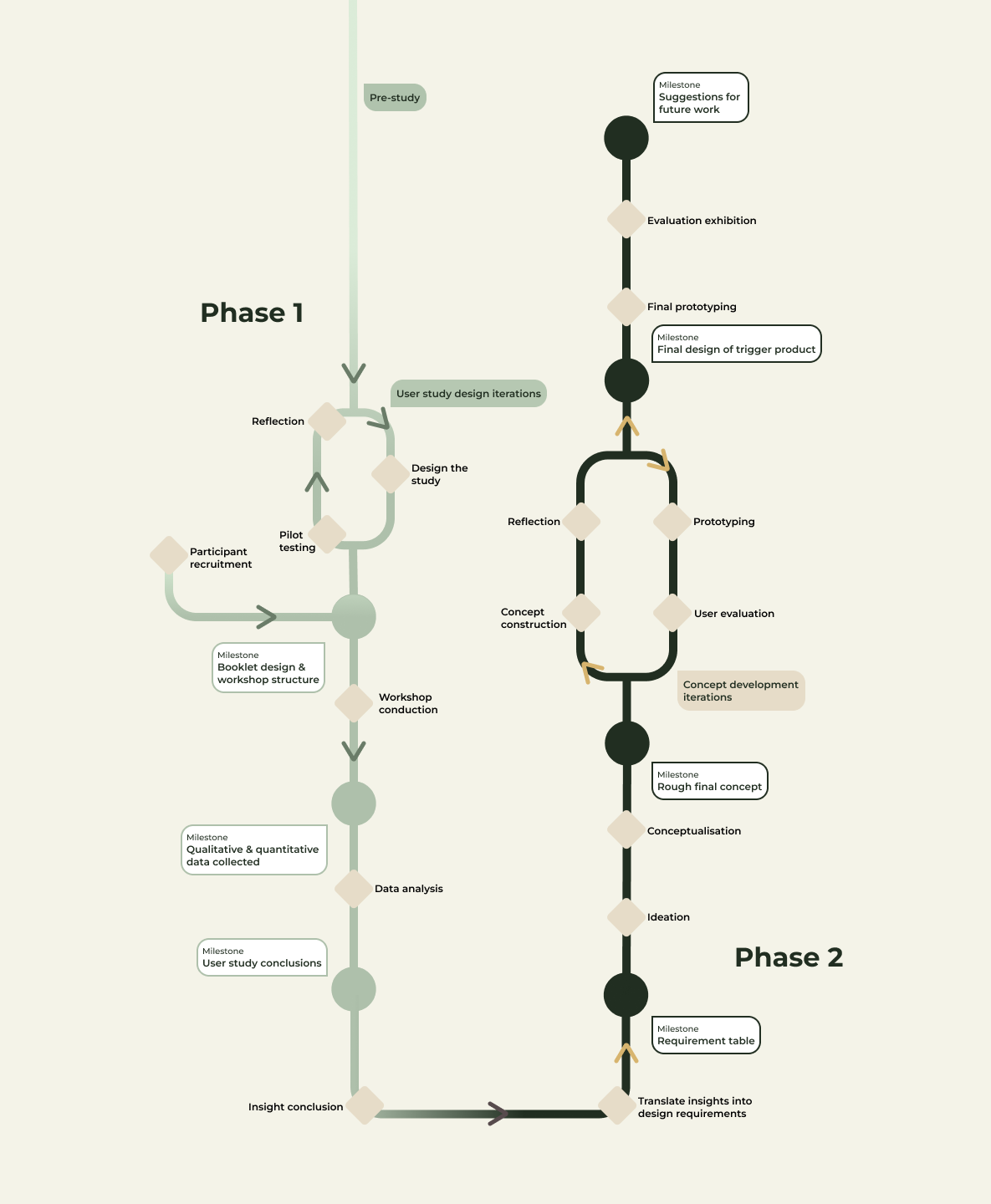
The thesis project contained different design activities organised in three phases, all of which were open-ended and uncertain. The pre-study phase aimed at finding an adequate delimitation and a direction for the project. The User Study phase, which was constructed after the pre-study, aimed at understanding the target group in aspects of overconsumption and sustainability attitudes in real life context. The project concluded with a design phase for the trigger product to concretise the insights gathered from the previous phases, and to deliver the project objective.

What do they ACUTALLY think?
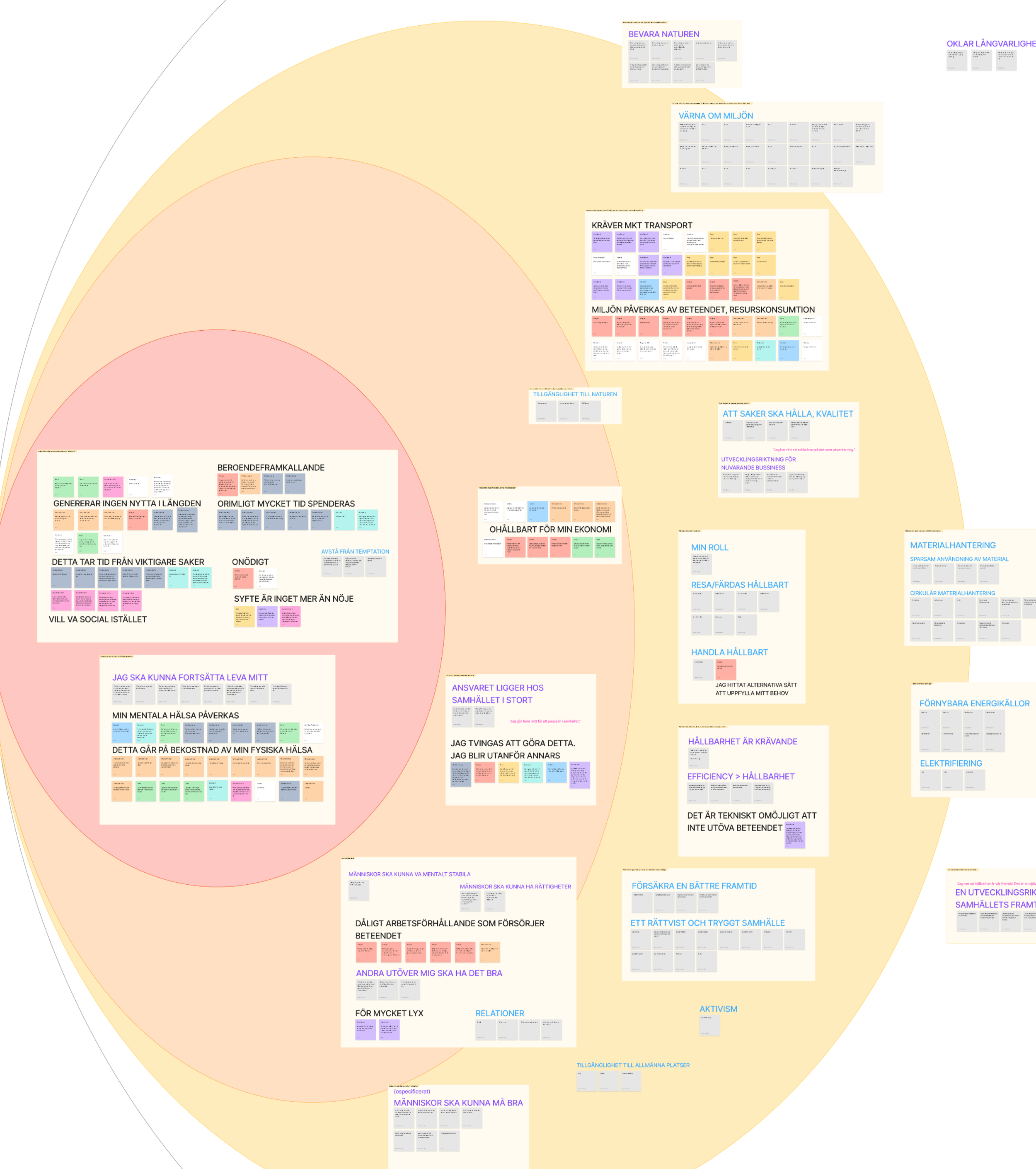
The user study, which we call the mentality exploration, was carried out through four main steps: the iterative design of a questionnaire booklet, recruitment of adolescent participants, facilitation of workshops for data collection, and data analysis of the responses. With these workshops, we wanted to know how adolescents reflect on their everyday behavior, dive deeper into their mentalities around sustainability and connect the dots between their behaviors and their emotions.
Endless possibilities, but we had a vision…
The design phase was structured to support both divergent and convergent exploration of the solution space. The process moved from translating analysis conclusions from the previous phase into design requirements, generating a variety of ideas, to deciding design direction and developing the holistic final concept. Finally the trigger product was also evaluated in an exhibition setting.

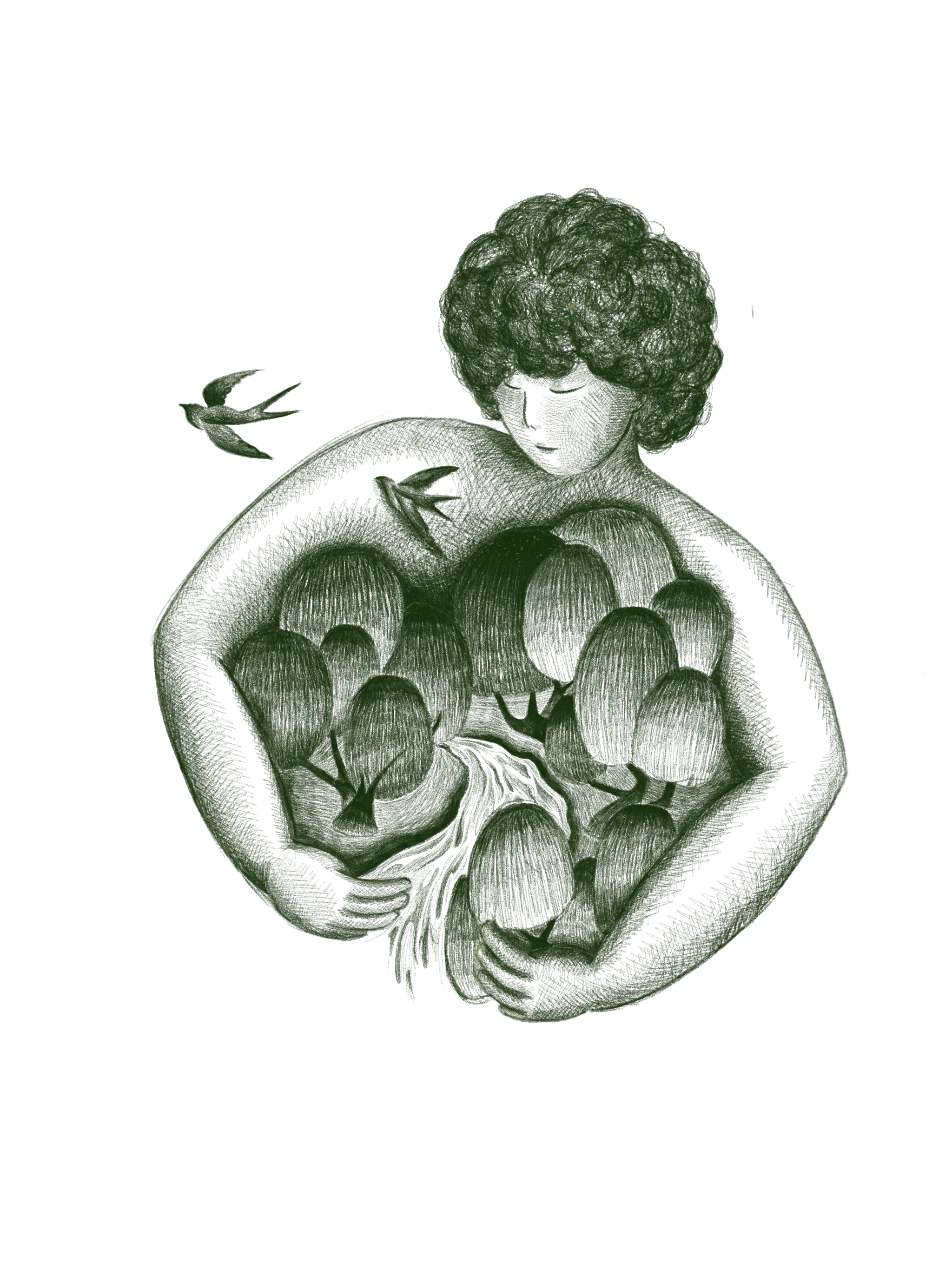
A vision of creating something meaningful, impactful, and beautiful…
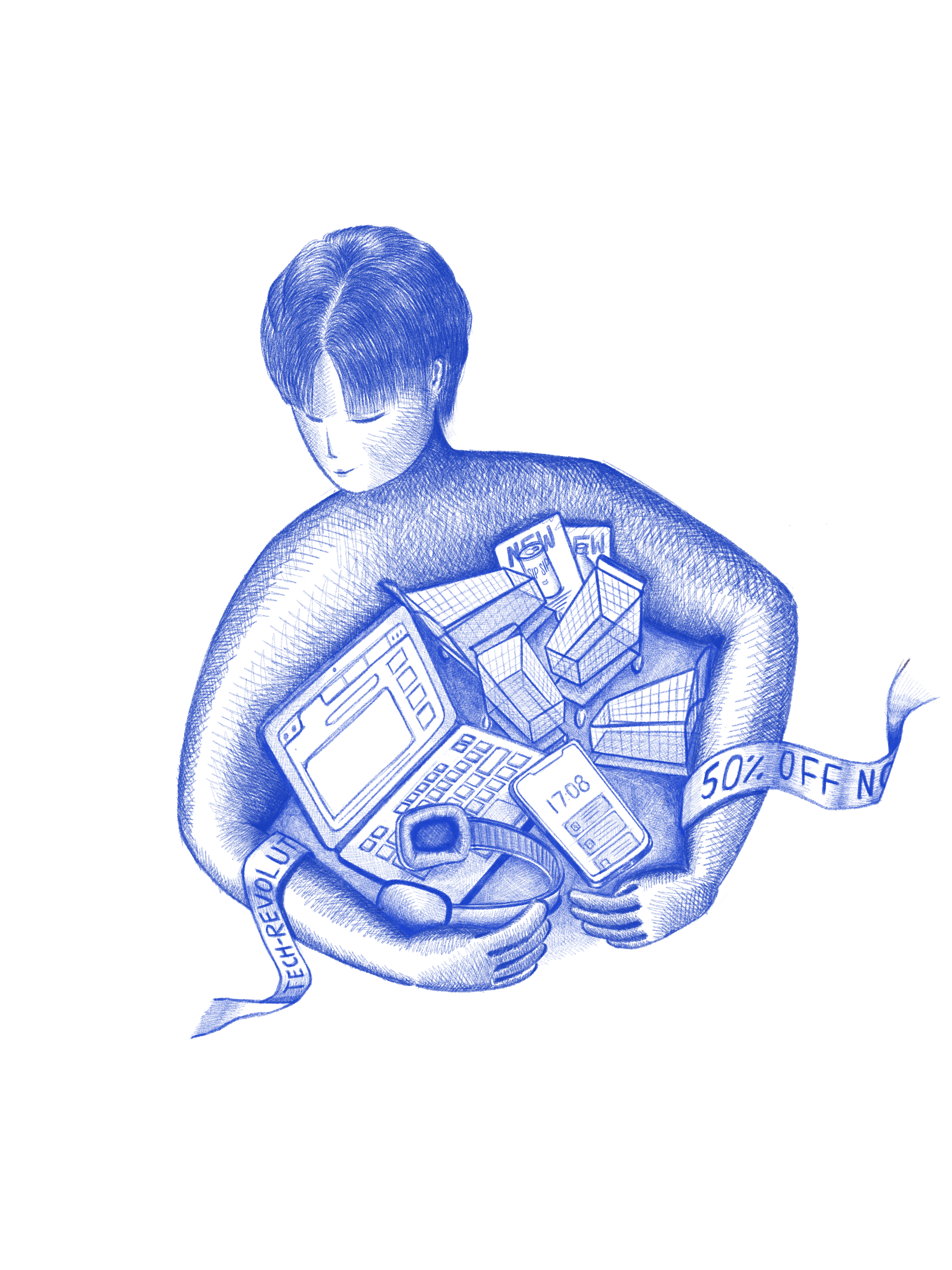
Introducing: Vänskapsprövningen
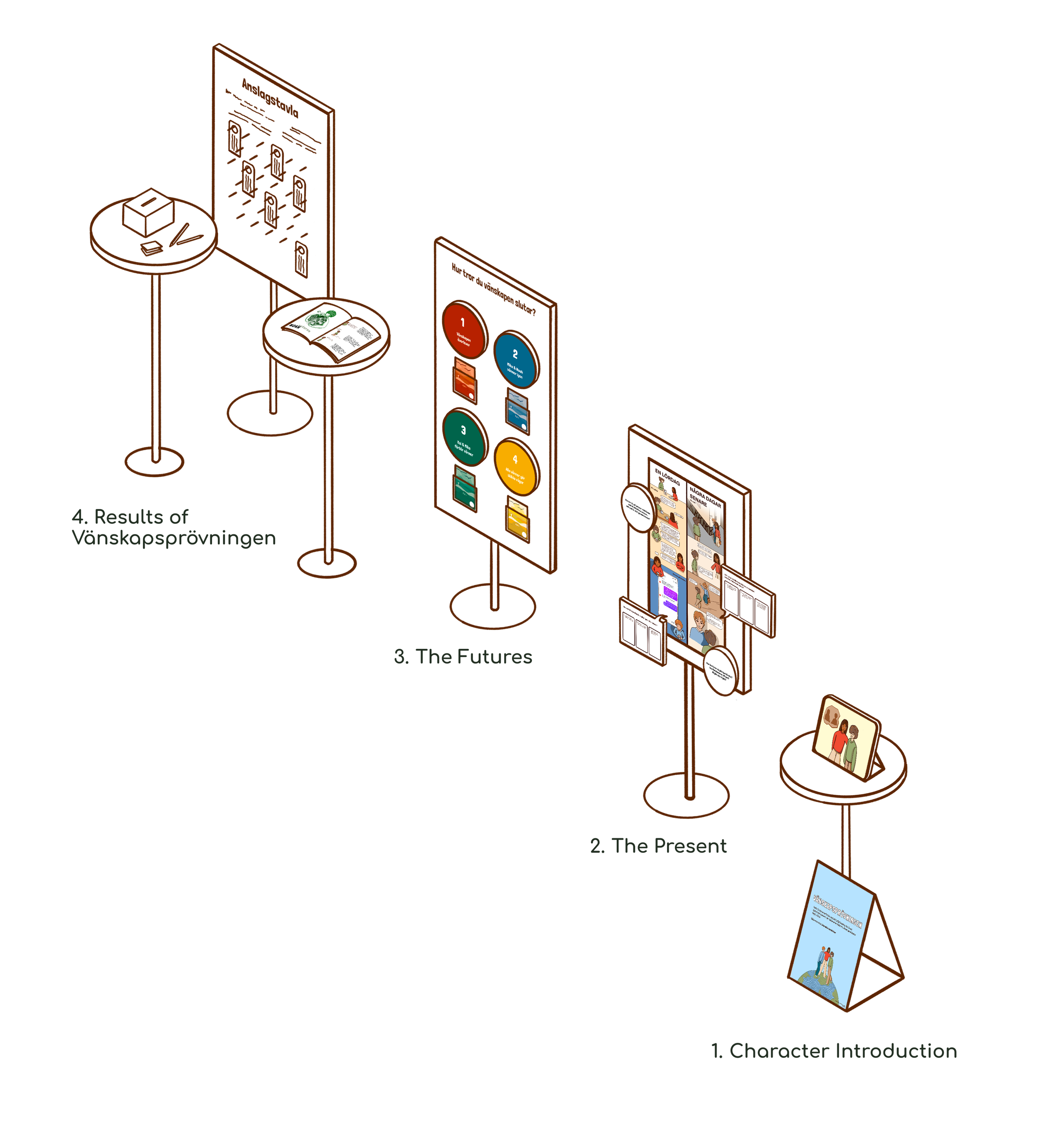
The final design takes form in an interactive installation that we call Vänskapsprövningen. It is a symbolic and metaphoric storytelling experience that makes room for reflection and dialogue. It is divided into four different story sections: The Character Introduction, The Present, The Futures and The Results of Vänskapsprövningen.
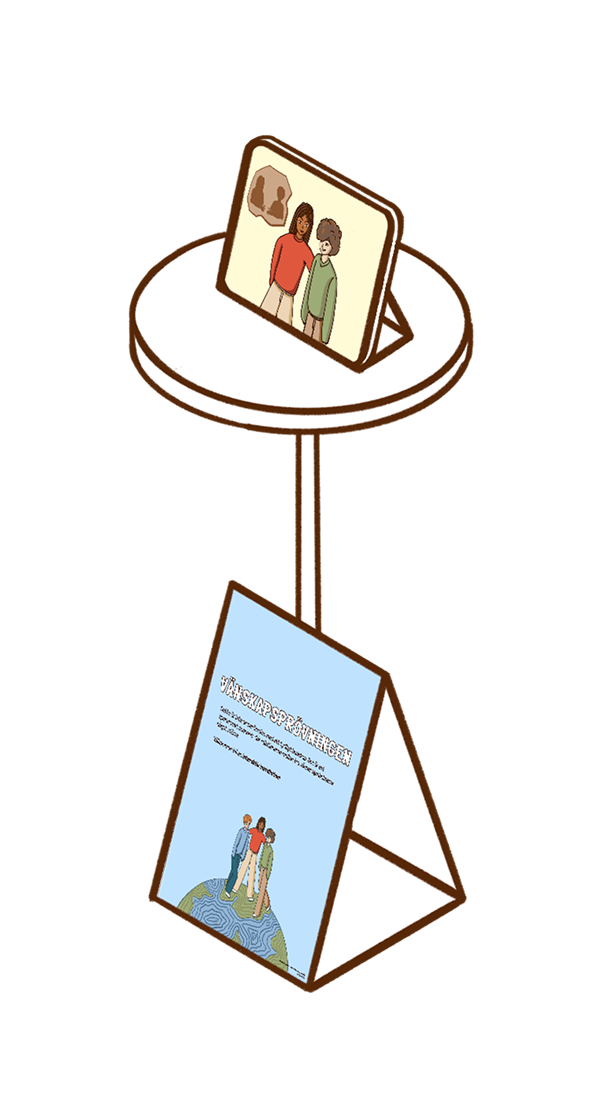
Section 1: Character introduction
Here we want to begin immersing the interactor in the story, build a relationship with the characters and explain their backgrounds
-
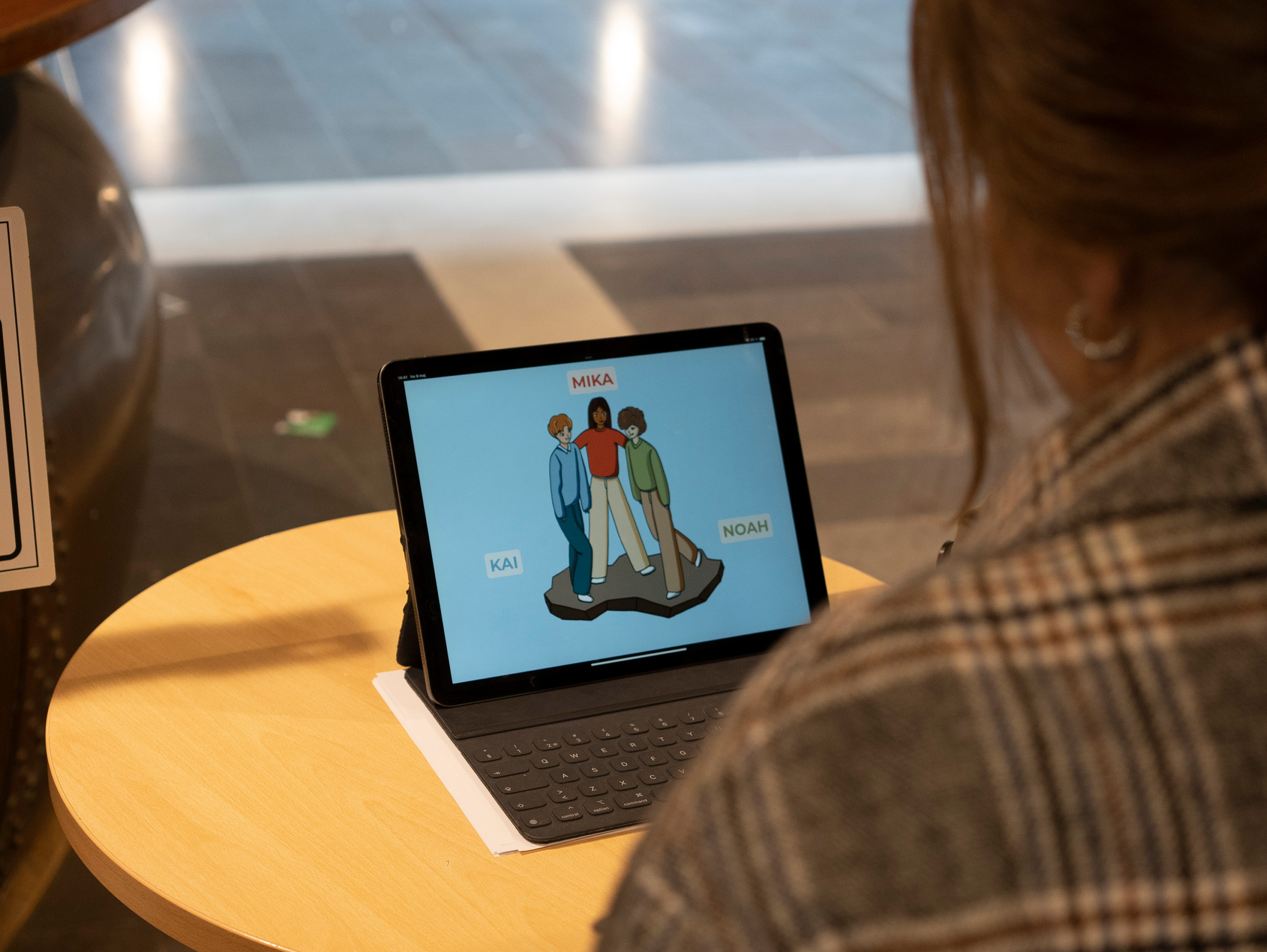
We are initially introduced to two characters, Mika (representing humans) who is curious and explorative and Noah (representing nature) who is calm and caring. They are childhood friends with differing qualities that complement each other, ultimately creating a strong bond. We are then introduced to Kai who is energetic and driven, and joins the friend group during the teenage years. Kais’ personality and lifestyle is fast, infectious and rather exciting, causing Mika to admire it and feel the urge to follow along the adventures.
However, their accelerated lifestyle does not suit Noah well. While Kai encourages Mika to stay curious and constantly look for new things, Noah feels longing for the beautiful things that already exist in life. The development of this dynamic creates more and more tension…
-
Audiovisual slideshow, to increase sensorial accessibility, visual memorability, and distinguishment of characters.
Section 2: The Present
What is happening with the trio in present time? Here we begin to understand the complexity of the story, and begin to discuss the issues that arise
-
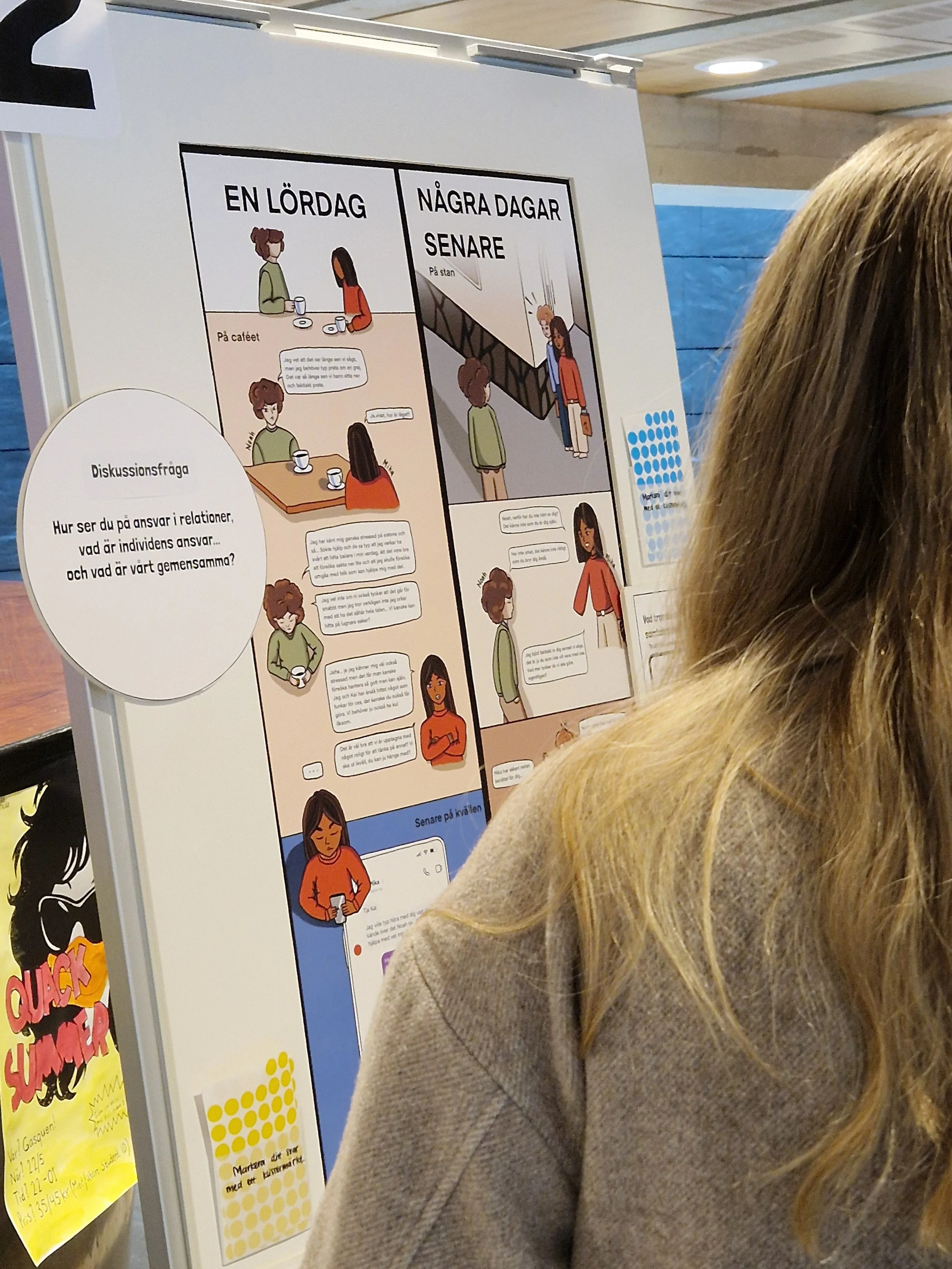
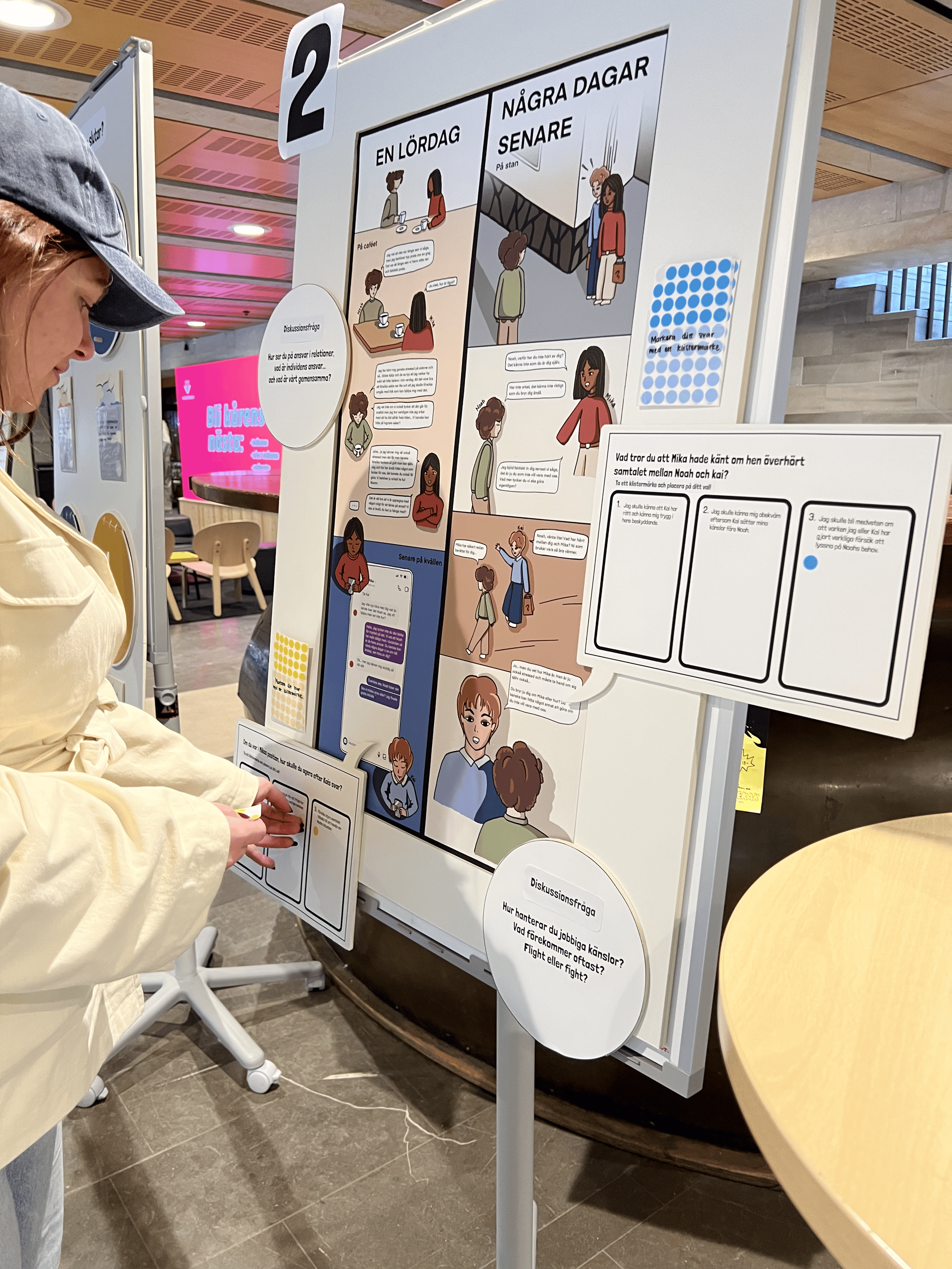
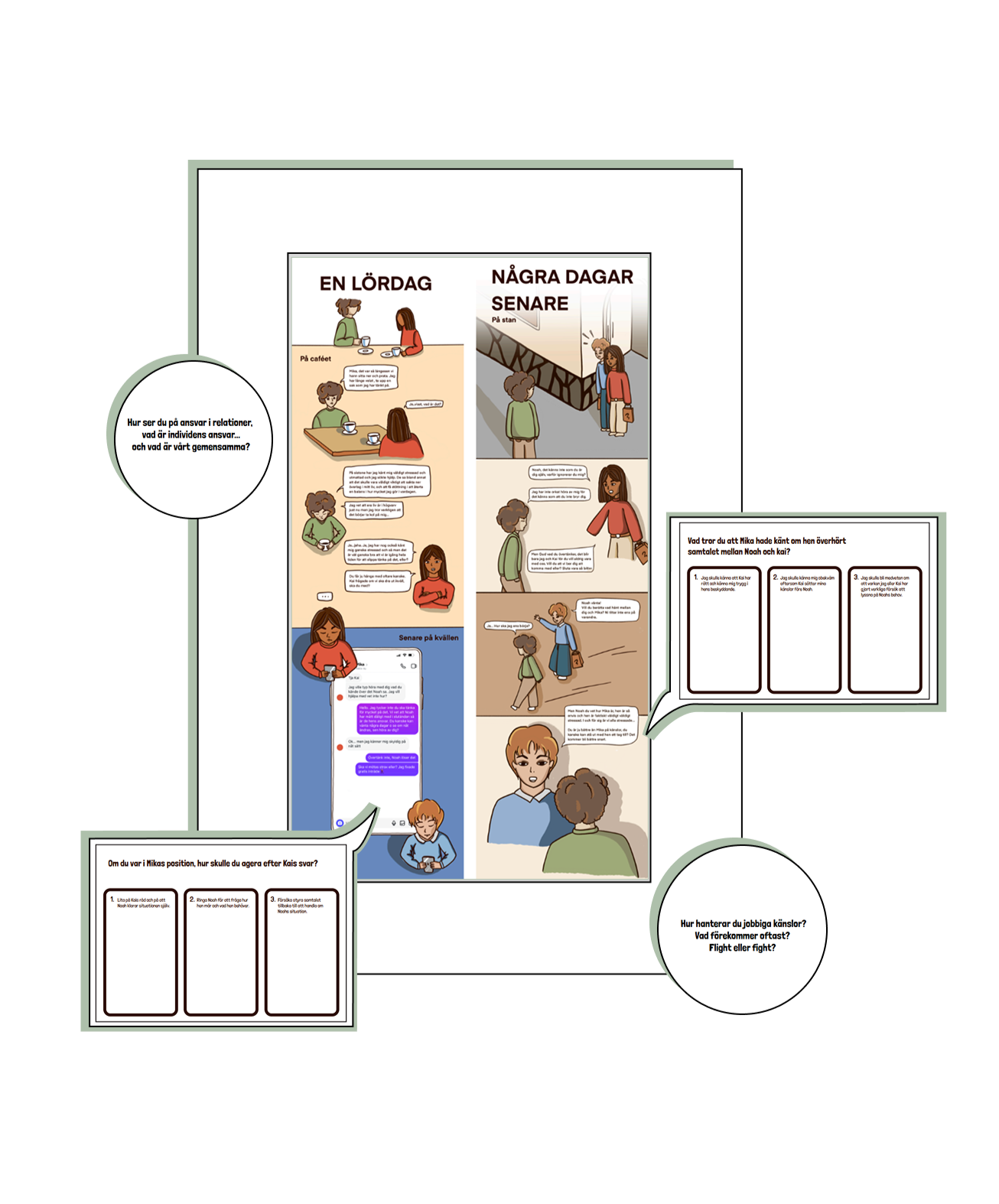
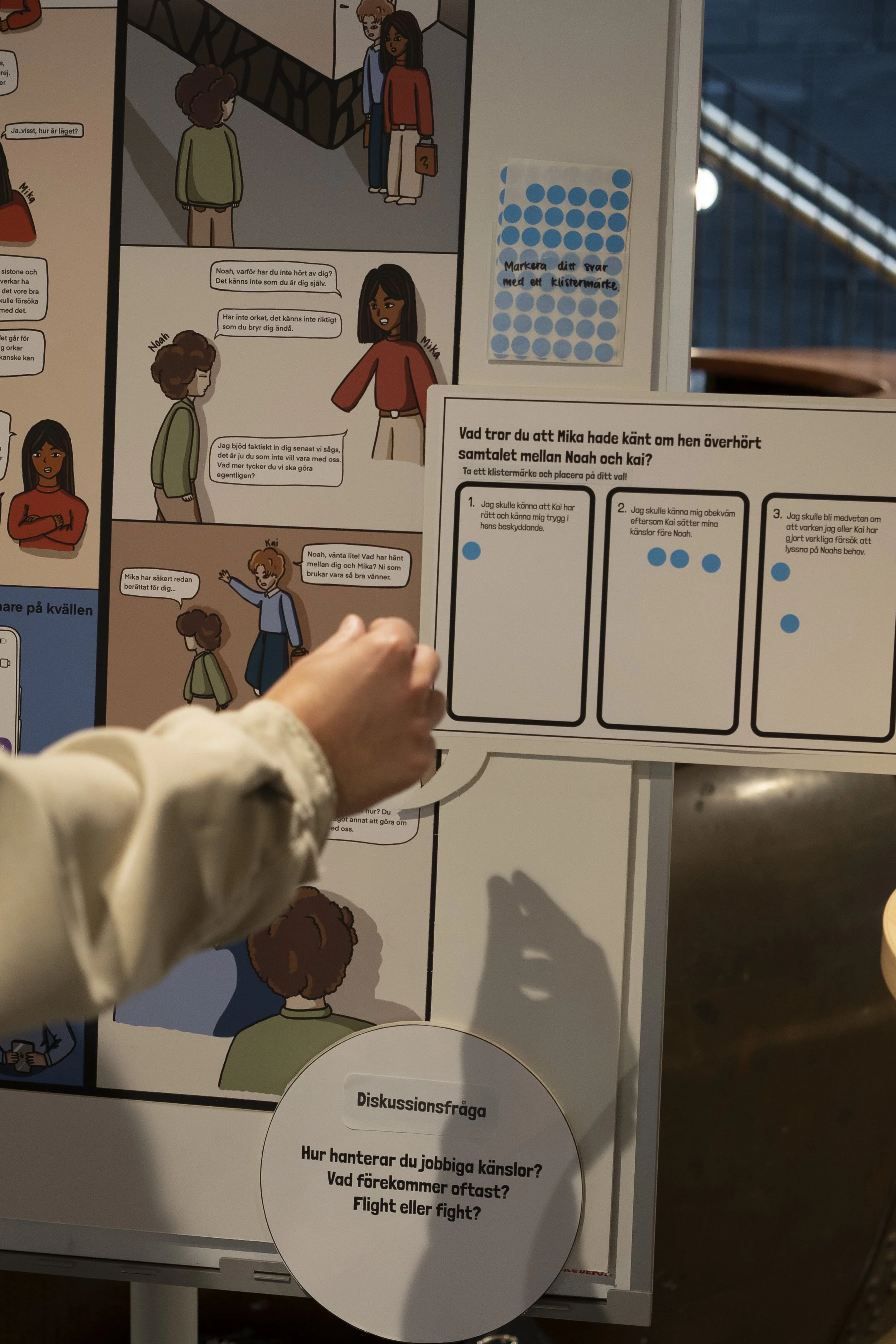
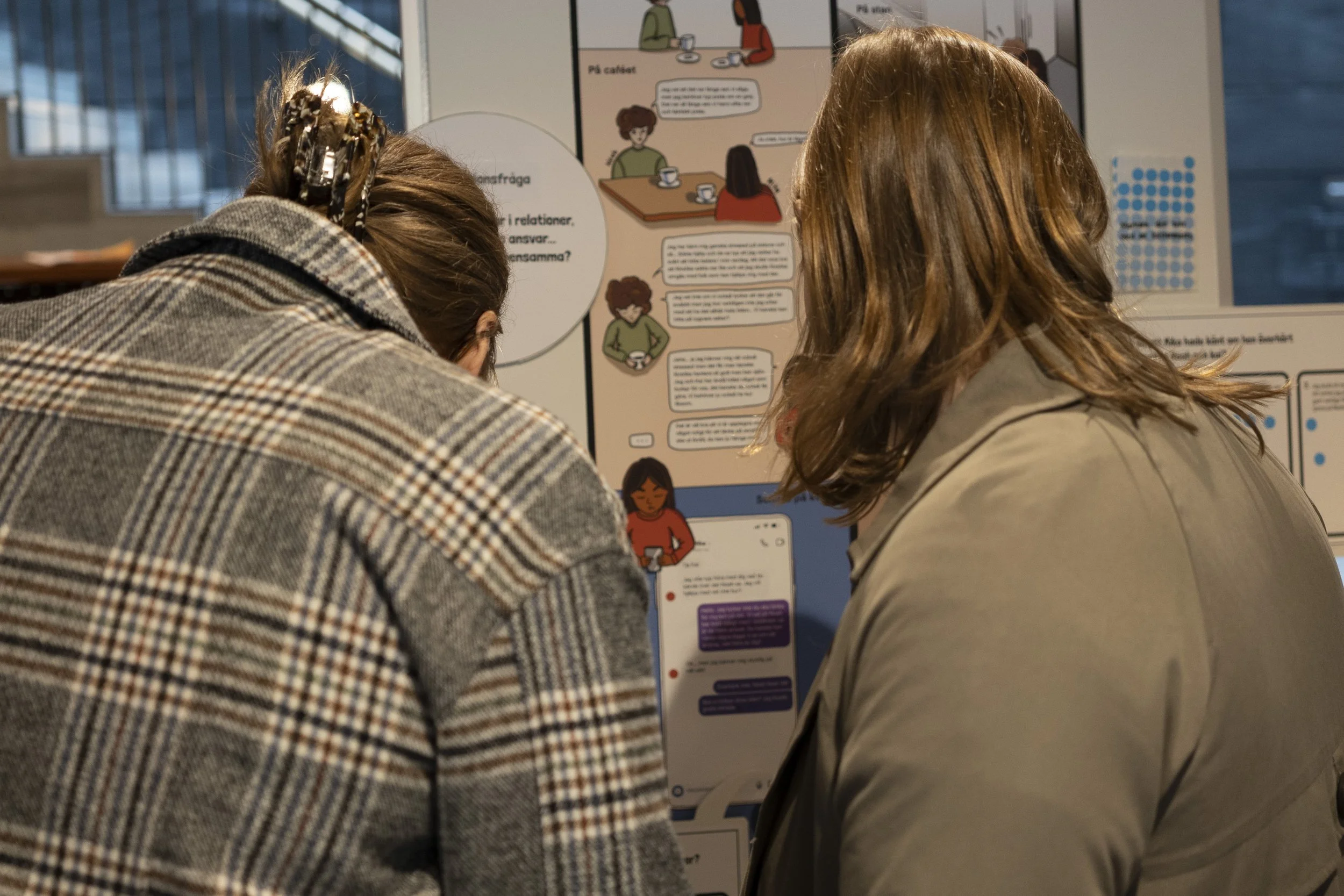
The story follows the present time where Noah is making an attempt at communicating recent personal mental health issues, explaining the unsustainability of the accelerated lifestyle for their friends. Mika explains that it is their way of managing their own stress, by seeking enjoyment and excitement, and indicates that Noah should try to keep up. Later the same day, a digital conversation can be seen between Mika and Kai, in which Mika expresses worry about Noah's situation. Kais’ response showcases their mentality regarding responsibilities as they assure Mika that Noah will figure it out by themselves.
Further along we follow a passive aggressive interaction between the friends as they stumble upon each other, with Noah communicating a perceived lack of care from their friends and Kai ultimately justifying Mika's previous actions.
-
Storyboard + reaction questions + discussion questions , to increase interactivity and immersion.
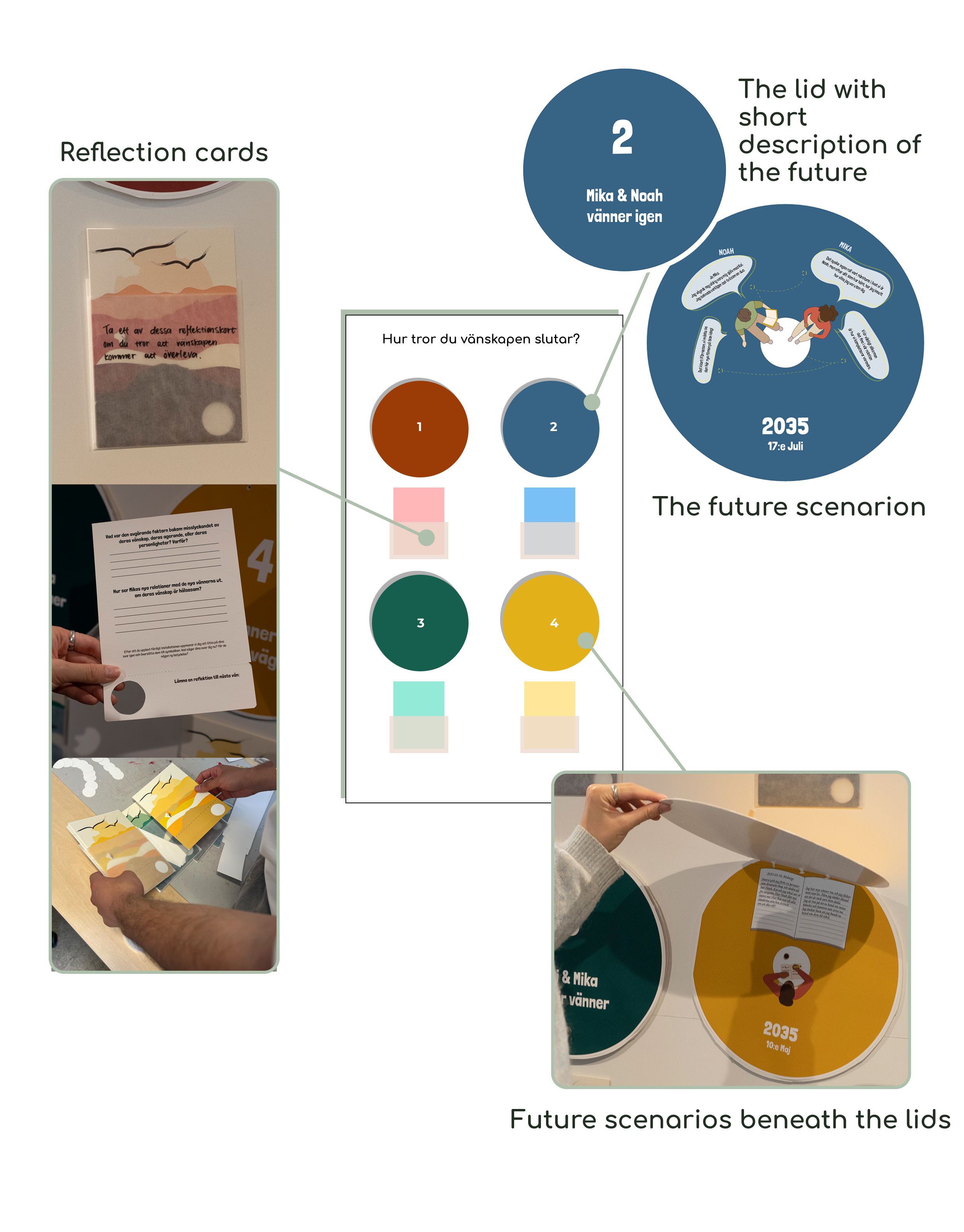
Section 3: The futures
Now we want the interactor to speculate, envision and imagine. What does the future hold for our trio?
-
In the third section, the user is given four options representing four different futures for the three friends. All the scenarios display ways in which the dynamic between human beings, nature and consumption could end up without actually including judgement. For each possible outcome, all three friends could be happy and content. See full report for detailed description of all scenarios.
-
Interactive lids + memorabilia + discussion questions , to increase the feeling of action and consequences, introduce future speculation, and increase long term effect
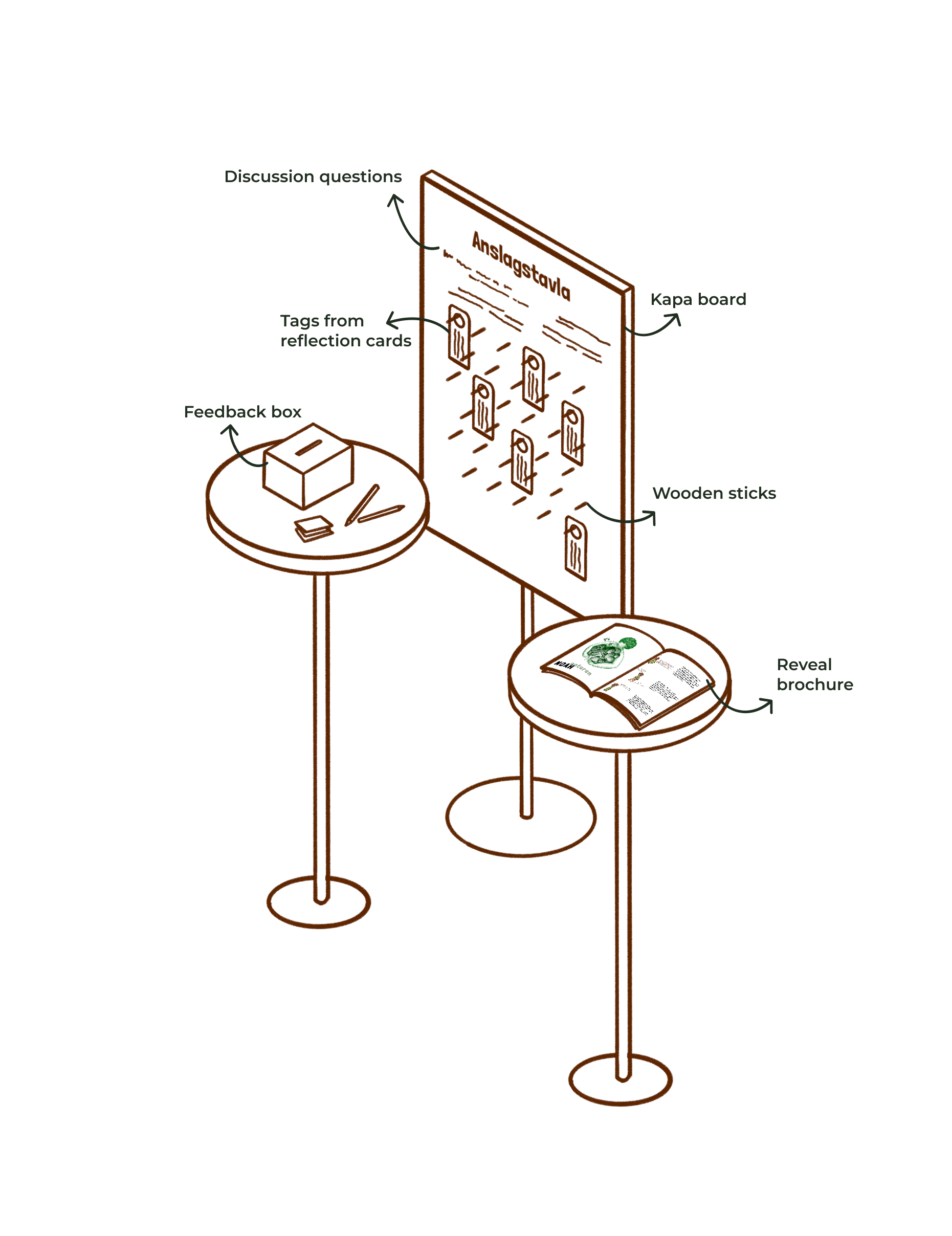
Section 4: The Results of Vänskapsprövningen
-
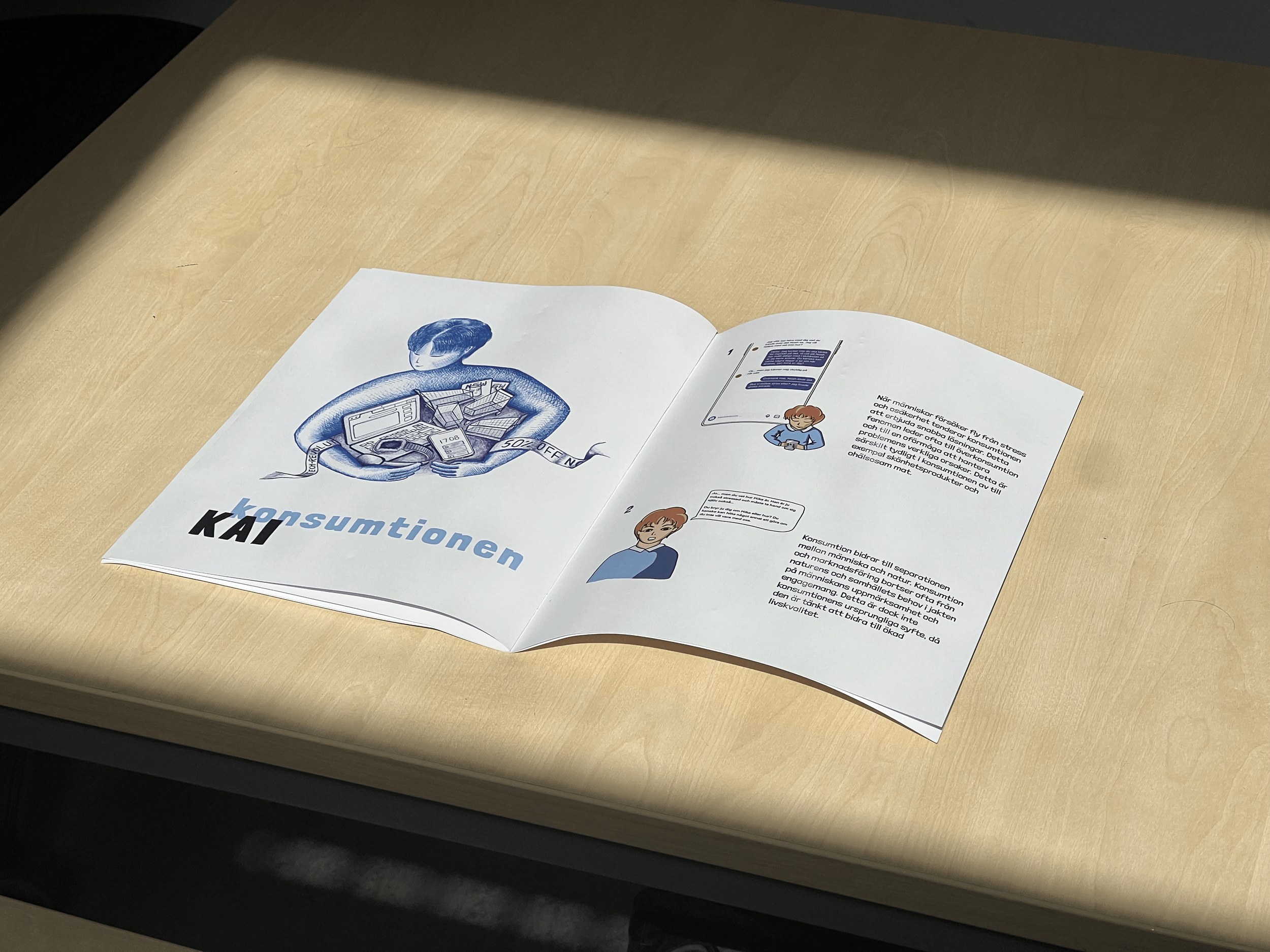
The metaphor is revealed in the result section. In short, human beings (Mika) tend to avoid facing emotional challenges and the normalised accelerated lifestyle acts as a distraction from larger environmental and societal problems. Consumption (Kai) plays a role in distracting human beings from the communication with nature (Noah), which for instance reflects how social media provides accessible entertainment which takes up the majority of attention.
This dynamic is revealed through general explanations of the symbolic story, and is further indicated through detailed explanations of each scene in the story, the characters actions and its symbolism.
-
Brochure + bulletin board, to enhance the ‘here is your result’ factor, add a plot twist element and help the interactors be inspired by and inspire others
Be patient, trust the process.
This project was the most open-ended project I have ever worked on, giving room for us to create our own boundaries, limitations and guidelines. While the partnering organisation Digidem Lab offered mentorship, no expectations or requirements were set which resulted in a lot of creative freedom but also a great deal of challenges. In Swedish we say one needs to “ha is i magen” which basically entails to trust the process. This is a skill I have honed over the years and specifically in this project, and I will bring it with me throughout all my work due to its importance.
- Reflection from an exhibition visitor
“It is important to do things based on utilitarian motivation and consideration rather than thinking about the economic value or the short-lived happiness you get from it.”
- Reflection from an exhibition visitor